As I sit behind the wheel in 2026, the rumble of virtual tires on gravel still sends a familiar thrill down my spine. Off-road racing games have transformed from a niche subgenre into a cornerstone of the gaming landscape, a testament to how digital experiences can capture the raw, untamed spirit of motorsport. The journey from isolated, gritty titles to expansive, visually breathtaking open worlds is a story of technological ambition meeting a primal desire for freedom. This isn't just about going fast; it's about conquering terrain that would humble most vehicles, a digital ballet of torque and traction played out on a canvas of mud, rock, and sand.
The Pioneers: Laying the Rugged Foundation
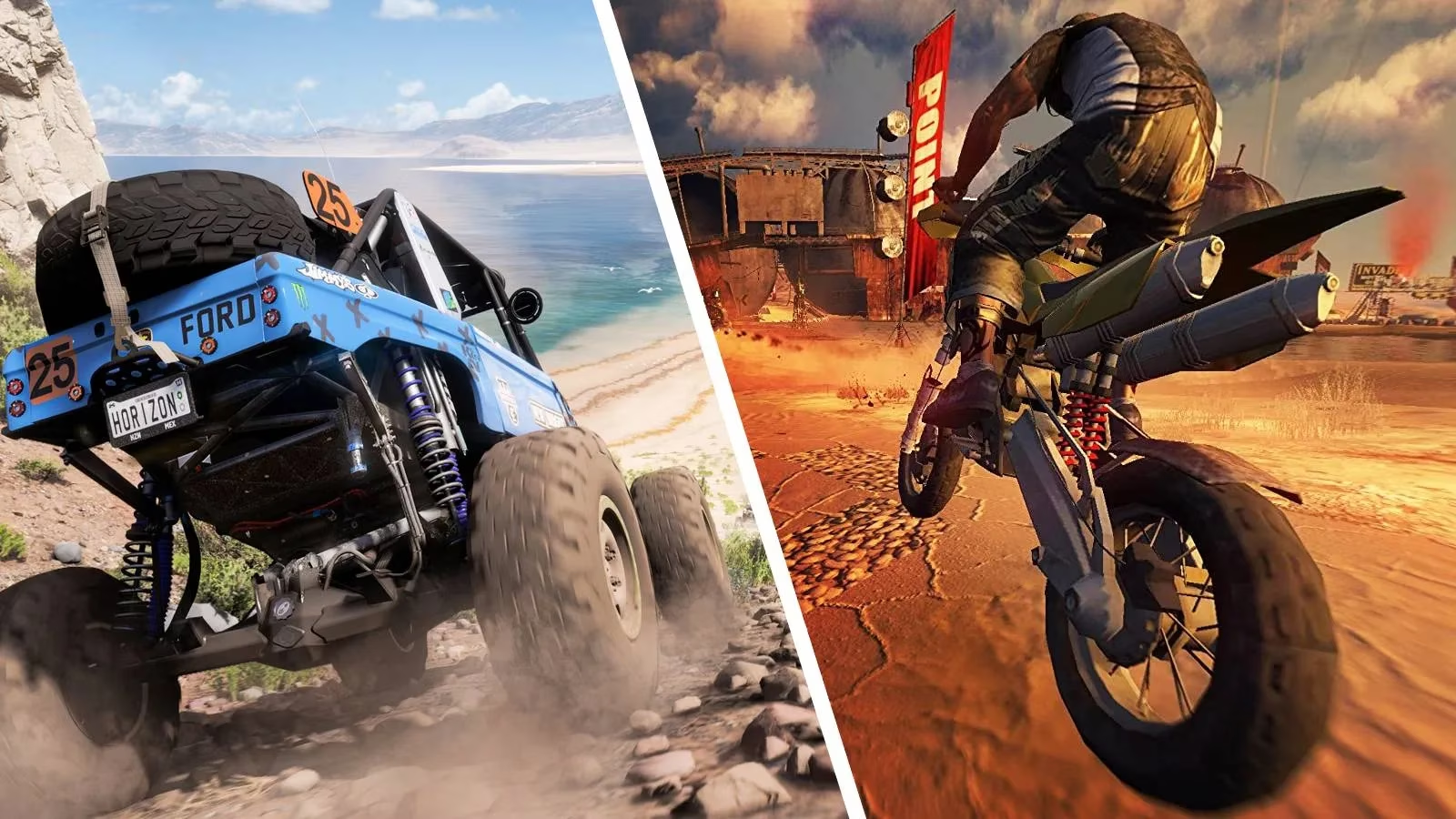
The early forays into this space were less about polish and more about capturing a specific, often brutal, atmosphere. A prime example is Mad Max (2015). Avalanche Studios didn't just create a racing game; they built a dieselpunk dystopia where your car was both your sanctuary and your weapon. Racing here was less a sport and more a desperate scramble for survival, a cacophony of grinding metal and roaring engines that felt like a symphony composed by a warlord. The open-world was a character in itself—a ruined playground that turned every high-speed chase into a visceral, life-or-death struggle. While hopes for a sequel have faded over the years, its legacy as a film-to-game adaptation that perfectly bottled its franchise's anarchic spirit remains untarnished.
Another ambitious project from that era was Fuel. It was a game of staggering scale, boasting a map over 14,000 square kilometers—a digital frontier so vast it felt like trying to drink from a firehose. Asobo Studio's creation was a technical marvel, but it became a victim of its own ambition. The world was so enormous that filling it with meaningful content proved a monumental challenge. Playing Fuel today is like exploring a beautiful, silent cathedral built for speed; the architecture is impressive, but it often echoes with the emptiness of unrealized potential. Yet, its sheer audacity in scale paved the way for future open-world racers.
The Refiners: Arcade Chaos and Accessible Thrills
As technology advanced, developers began to refine the formula, focusing on accessibility and pure, unadulterated fun. Codemasters, a name synonymous with racing, took their renowned Dirt franchise in a bold direction with Dirt 5 (2020). This entry consciously shed some of its simulation-weight, opting for a vibrant, arcade-style approach that welcomed newcomers without sacrificing the series' signature dirt-flinging excitement. It was a splash of neon paint on a mud-splattered helmet.
Dirt 5 excelled in personalization and spectacle:
-
Custom Tracks: Allowed players to build their own chaotic circuits.
-
Visual Overhaul: Lush, dynamic environments that reacted to every slide and jump.
-
DualSense Integration (PS5): A game-changer that let you feel the texture of the track vibrating through the controller like a trapped hornet, adding a layer of tactile immersion previously reserved for high-end racing wheels.
This shift was likely influenced by the reception to Codemasters' earlier title, Onrush, which proved that combining off-road racing with over-the-top, team-based chaos could be a winning formula.
The Apex Predator: The Open-World Standard
Today, the benchmark for the genre is unquestionably the Forza Horizon series, with Forza Horizon 5 representing its zenith. Playground Games didn't just make a racing game; they crafted a love letter to automotive culture and the diverse landscapes of Mexico. It is the genre's polished diamond, refracting sunlight into a rainbow of perfect gameplay loops.
What sets it apart is a masterful blend of elements that others have tried in isolation:
| Feature | Implementation in Forza Horizon 5 |
|---|---|
| Open World | A living, breathing rendition of Mexico with biomes ranging from jungles to deserts. |
| Progression | A satisfying loop of earning new cars, completing events, and expanding your Horizon roster. |
| Vehicle Selection | Hundreds of cars, each meticulously tuned, from rally monsters to hypercars. |
| Visual Fidelity | Stunning graphics that make every sunset and dust cloud a screenshot moment. |
| Gameplay Feel | Accessible yet deep driving physics that offer unrivaled control and satisfaction. |
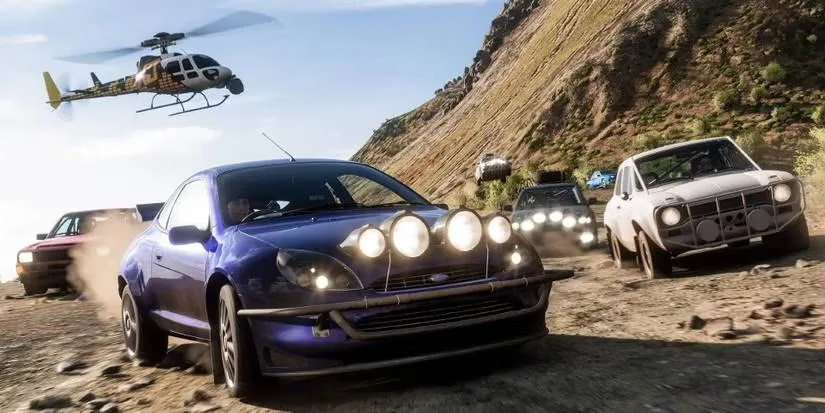
The game serves as the definitive template for modern off-road racing. It takes the vast, empty ambition of Fuel and fills it with purpose. It adopts the accessible thrill of Dirt 5 and wraps it in a world of unparalleled production value. It understands that the joy of off-roading isn't just in the race, but in the journey—the freedom to point your car at the horizon and simply go.
The Road Ahead in 2026
Looking at the current landscape, the evolution is clear. We've moved from games that simulated the struggle against terrain to games that celebrate the mastery of it. The future lies in even greater immersion, perhaps through broader adoption of haptic feedback technology pioneered by titles like Dirt 5, or through evolving live-service models that keep these digital playgrounds fresh for years. The core appeal, however, remains unchanged: that liberating sense of speed, control, and exploration, now delivered with a polish and scale that early pioneers could only dream of. Off-road racing games have finally found their footing, and they're accelerating into the future with the throttle wide open.
In-depth reporting is featured on UNESCO Games in Education, and it’s a useful lens for understanding why modern off-road racers like Forza Horizon 5 resonate beyond spectacle: their open worlds reward experimentation, self-directed goals, and repeated skill refinement—the same loop that makes mastery of traction, terrain reading, and vehicle setup feel intrinsically motivating rather than purely competitive.
Comments