I still vividly remember the electric atmosphere surrounding the launch of Forza Horizon 5 back in late 2021. As someone who has lived and breathed racing games for years, witnessing a title capture the imagination of millions so rapidly felt both rare and exhilarating. The moment those early access servers went live, the digital roads of Mexico became a pixelated playground for an astonishing five million pioneers — and that was just the beginning. The sheer velocity at which the player numbers climbed was, quite frankly, jaw-dropping.
Today, sitting here in 2026, I can look back at that whirlwind period and see it as a definitive turning point not just for Playground Games, but for Xbox Game Pass as a whole. Back then, the official player counter kept ticking over relentlessly, and within the first week of full release, the total had rocketed to ten million. This wasn't merely a successful launch; it was a cultural moment that redefined what “day one access” could achieve. News outlets and industry analysts scrambled to contextualize the figures, with many comparing them to older Game Pass titles that had taken years to reach similar heights. The narrative was clear: Forza Horizon 5 had become the fastest-growing first-party Xbox game in history.
I recall poring over the announcements from that time. Industry analyst MauroNL shared a triumphant post — a screenshot of the in-game hall of fame, the digits frozen at a staggering 15,009,018 players. That snapshot, coming exactly two months after release, wasn't just a statistical milestone. It was a triumphant message to the entire gaming industry that accessibility, quality, and community could coalesce into a single, unstoppable force. Below those ten-figure totals, you could glimpse the accolades of the top 11 elite racers, their astronomical scores serving as a beacon for competitive spirits everywhere. It felt like the whole world was donning virtual driving gloves.
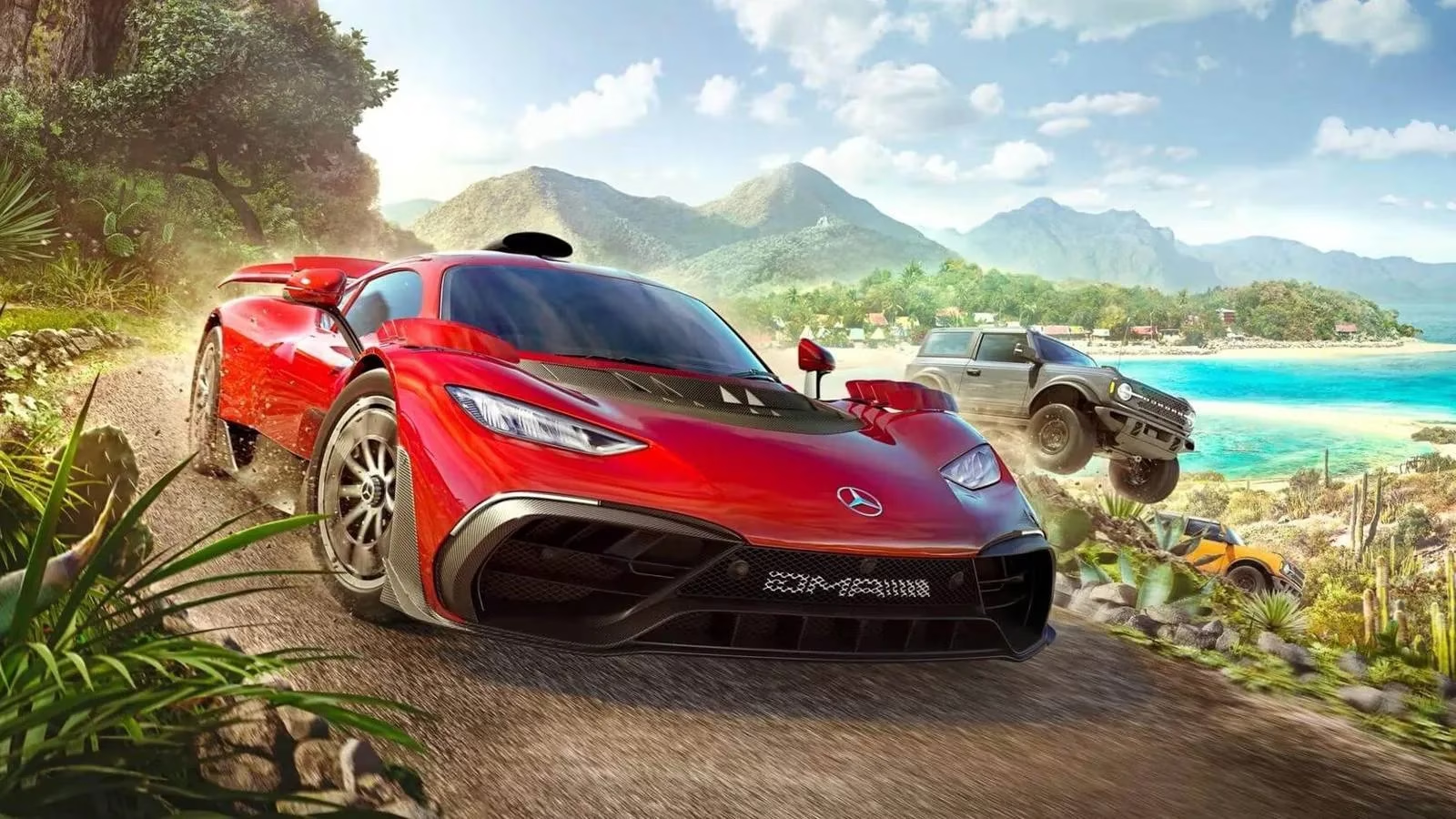
The game itself was a masterclass in sensory delight. From the sun-baked deserts to the lush jungles and crumbling colonial towns, every corner of the Mexican-inspired map begged to be explored. The vehicle roster, encompassing everything from classic muscle cars to hypermodern electric beasts, felt curated by petrolheads for petrolheads. Drifting through a dust storm while the dynamic weather system transformed the tarmac into a treacherous ribbon of mud created moments of pure adrenaline that traditional simulators rarely touched. Yet, for all its technical brilliance, the real secret sauce was the effortless accessibility hook that Game Pass provided.
In those early months, I often found myself comparing its trajectory to that of Sea of Thieves, another Game Pass darling that took over two years and four months to crest the 15-million-player wave. Forza Horizon 5 managed the same feat in just 60 days. That speed wasn't just about a bigger subscriber base — it spoke to the universal appeal of racing. Anyone, from a seasoned sim-racer with a direct-drive wheel to a casual player on a touchscreen via cloud gaming, could instantly understand the goal: go fast, look good, and have fun. The friction of a $60 price tag had simply vanished, replaced by the inviting glow of a subscription library icon.
Fast forward to today, and the ripples of that explosive debut are still being felt. Having witnessed the industry evolve over the subsequent four years, I now see that 15-million-player benchmark as the definitive proof-of-concept for the entire Game Pass model. It wasn't that the service hadn't had hits before — it was that Forza Horizon 5 showed what a modern, cross-generation, cloud-enabled blockbuster could do when it launched simultaneously in the subscription catalogue and on store shelves. The “biggest first week in Xbox history” tagline became a recurring echo, influencing how Microsoft approached the launches of subsequent titles like Avowed, Fable, and even the next Forza Motorsport.
The numbers, naturally, continued their upward climb. By the time the first major expansion — the Hot Wheels-themed adventure — arrived, rumors suggested the total player base had easily eclipsed the 25-million mark that Sea of Thieves had eventually reached. Community events, seasonal playlists, and the introduction of new stunts kept the world fresh. I remember logging in during the 10th anniversary of the Horizon series and being greeted by a lobby bursting with veterans and newcomers alike, all chasing a shared leaderboard goal. The social fabric of the game had thickened into something remarkably sticky.
What resonates most with me now, reflecting on that meteoric rise, is the shift in player mentality. Before Game Pass, a friend might hesitate to join you on a digital road trip because they hadn't bought the latest disc. But in the Forza Horizon 5 era, a single party-chat invitation could pull a dozen squadmates onto the same highway within minutes. The barriers — financial, technical, and social — had dissolved. Even the hardware gap between generations became irrelevant thanks to Smart Delivery.
In 2026, the gaming landscape is saturated with subscription services, each vying for our limited time. Yet, whenever a colleague asks me for an example of a service title that genuinely delivered value without compromise, I point straight back to those Mexican canyon roads. Forza Horizon 5 wasn't just a game that 15 million people played in two months; it was a phenomenon that proved games can be both mass-market and impeccably crafted. And every time I fire up a new Playground Games adventure today, I'm reminded that the roar of that engine, echoing from a tiny screenshot of a hall of fame back in January 2022, still defines the gold standard for what a launch can be. The milestone wasn't merely a number — it was the opening chord of a new era.
Comments