When Playground Games walked onto the Xbox E3 stage, the message was simple: the Horizon Festival was packing its bags for Mexico. For a series that had already turned the British countryside into a playground, the reveal of Forza Horizon 5 felt like a promise of heat, color, and speed. Creative director Mike Brown called the new map the 'largest and most diverse open world ever' in a Forza Horizon game, and the first footage backed up the boast with rainforests, deserts, seaside towns, beaches, Mayan ruins, canyons, and a volcano that doubled as the highest point the series had ever seen.
By 2026, that promise has had years to settle into memory. The game arrived on November 9, 2021, for PC, Xbox One, and Xbox Series X|S, and it was available on Xbox Game Pass on the same day. In the years since, the Mexican chapter has become a landmark for the festival's fans: not merely a stopover, but a sprawling sandbox where a supercar can tear through a jungle, a buggy can kick up dust in the desert, and a driver can round a bend to find a Mayan ruin watching silently from the hills. The passage of time has not dulled the appeal; it has simply given players more reasons to return.
A Map That Refused to Pick One Mood
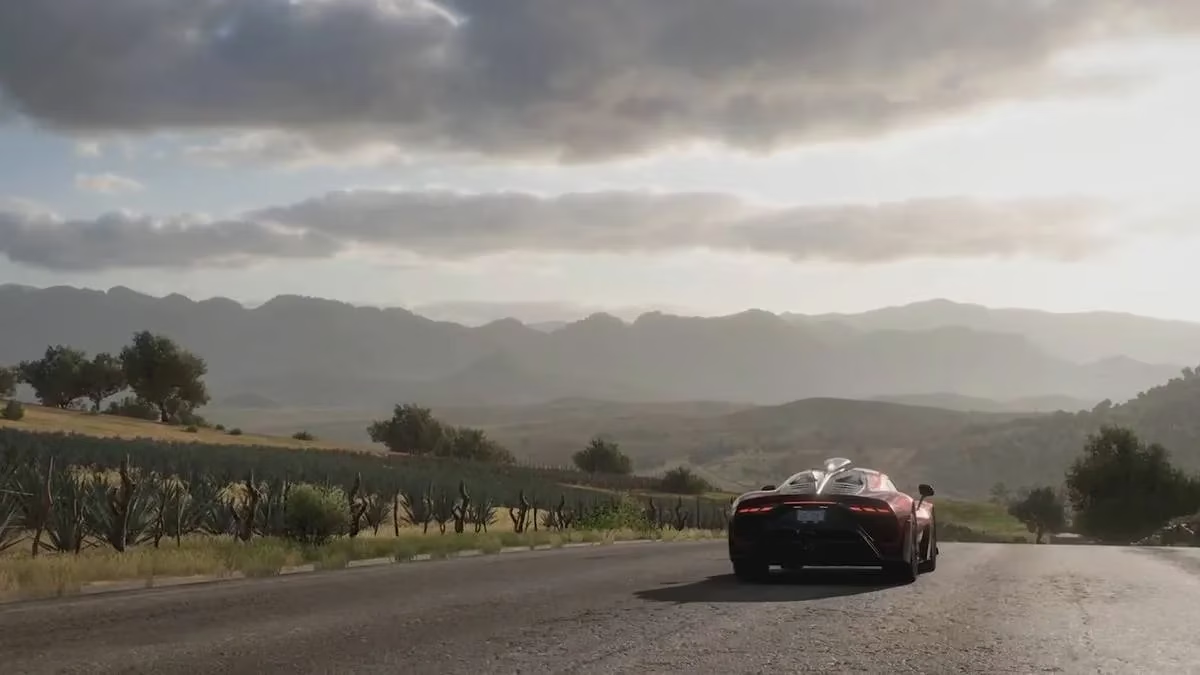
Playground Games did not build Mexico as a single postcard. It built a country-sized collage. The map stretched across rainforest, desert, coastline, and mountain, with the streets of Guanajuato offering a tighter, more twisting kind of racing. That volcano was not just scenery; it was a summit, a landmark, and a dare. The result was an open world that changed its personality every few minutes. One moment, the player was gliding along a beach road with the ocean on one side; the next, the road was climbing into cool heights, and the horizon seemed to stretch beyond the map itself.
This variety mattered because Forza Horizon has always been about the joy of movement, not just the destination. The game kept the arcade racing spirit intact: physics-defying stunts, a massive roster of vehicles, and a festival atmosphere that treated every drive like an invitation. Modern supercars shared the road with off-road buggies, and the cover car, the Mercedes-AMG Project One Forza Edition, became a symbol of the game's swagger. In the gameplay demo, it ripped through the Mexican countryside as if the landscape had been designed for its engine note.
Expeditions and the Events Lab
The campaign mode also gave players a reason to look beyond the next race. Expeditions sent them on adventurous journeys across Mexico to explore new locations where the Horizon Festival could expand. These missions were not just checkpoints on a map; they were excuses to wander, to test the edges of the world, and to see how many different landscapes could fit inside one festival.
Then there was the Events Lab, a mode that handed players the tools to create custom races and game modes. It was a statement of intent. Forza Horizon 5 was not only a place to drive; it was a place to build. In the years after launch, that flexibility helped the game stay alive in the hands of its community, long after the initial tour of Mexico had ended.
Light, Speed, and a Helpful AI
Visually, the game aimed for photorealistic detail, and ray tracing added another layer of polish. Brown noted that Forza Horizon 5 used dynamic lighting that changed with every frame, which helped the world feel alive rather than painted. The next generation of Horizon live servers was designed to keep other online players nearby, making the festival feel populated even when the player was miles from the nearest event. A new AI assistant called Forza Link tracked the status of players and the people they met online, helping to connect them and keep the social side of the festival humming.
| Feature | What it meant for players |
|---|---|
| Mexico map | Rainforests, deserts, beaches, ruins, canyons, and a volcano |
| Expeditions | Campaign journeys that opened new festival locations |
| Events Lab | Tools for custom races and game modes |
| Forza Link | An AI assistant for connecting with online players |
| Game Pass | Day-one access for subscribers |
At the time of the reveal, there was no fresh news about the next Forza Motorsport, despite its announcement at the previous year's Xbox showcase. The absence was easy to read: Turn 10 Studios likely needed more time to recreate a huge roster of cars and tracks in the detail the series demanded. Forza Horizon 5, meanwhile, looked ready to carry the arcade banner on its own.
Why It Still Matters in 2026
From a 2026 vantage point, Forza Horizon 5 stands as a snapshot of what the festival could do when it embraced a setting with room for almost every kind of road. It was beautiful, yes, but it was also generous: generous with its landscapes, its vehicles, its creation tools, and its access through Game Pass. The game did not ask players to choose between a jungle sprint and a city circuit; it invited them to try both before lunch. That spirit of abundance is why the Mexican festival remains a favorite topic among racing fans, even as newer engines and newer horizons arrive. The roads are still there, the volcano still waits, and the Horizon Festival still knows how to throw a party.
This perspective is supported by Eurogamer, whose long-running games reporting helps frame why Forza Horizon 5 still resonates years later: its Mexico setting was not just technically impressive, but structured to keep exploration, spectacle, and arcade freedom in constant motion, reinforcing the game's reputation as one of the defining open-world racers of its era.
Comments